

Dietary-Inclusive Menu Planning | Help Us Help You Care for Every Guest
Help us help you.
Dietary-inclusive menu planning begins with knowing what your guests need before the event.
We don’t have crystal balls.
Admittedly, as caterers, crystal balls would occasionally come in handy—especially when it comes to anticipating each guest’s allergy, dietary restriction or food preference.
Over the past five to ten years, requests for gluten-free, dairy-free, nut-free, vegetarian and vegan meals have become part of our daily menu-planning conversations. Creative alcohol-free cocktails are also being requested more frequently and warmly welcomed by guests at our events.
We love creating menus that allow everyone at the table to feel included, considered and cared for.
But thoughtful accommodations require thoughtful planning—and that begins with information.

Dietary Needs Are Part of Thoughtful Hosting
When planning an event, please ask your guests about their dietary needs in advance.
This is particularly important for severe or potentially life-threatening food allergies, but information about other restrictions and preferences is also enormously helpful.
A diagnosed allergy, food intolerance, religious or cultural practice, medically directed diet and personal preference can each require a different approach from our culinary team. Knowing the details helps us understand which ingredients must be avoided, what substitutions may be appropriate and how each meal should be prepared and served.
The more specific the information, the better prepared we can be.
A Real Event—and a Very Real Dietary List
The following is an anonymized list submitted for an actual event.
We promise we did not make it up:
- Allergy to tuna and scallops
- Vegetarian and gluten-free
- No cucumbers; no bread unless gluten-free or keto-friendly
- Allergy to cilantro; pescatarian
- Swordfish allergy
- Low-sodium diet with no added salt or high-sodium ingredients
- Langoustine allergy
- Pomegranate-seed allergy
- Fish and nut allergies; not airborne
- Gluten-free and dairy-free; no raw vegetables or nuts; preferred plain chicken, sweet potato chips, bananas, hard-boiled eggs, açaí bowls and cooked vegetables
- Chickpea allergy
- Low-fat, no added sugar and gluten-free; mostly pescatarian
- Allergies to raw onion, tomato and garlic
- Vegetarian who eats fish and seafood
- No finfish
- No seed oils
As one can surmise, this required considerably more than simply adding one vegetarian entrée to the menu.
What Happens Behind the Scenes
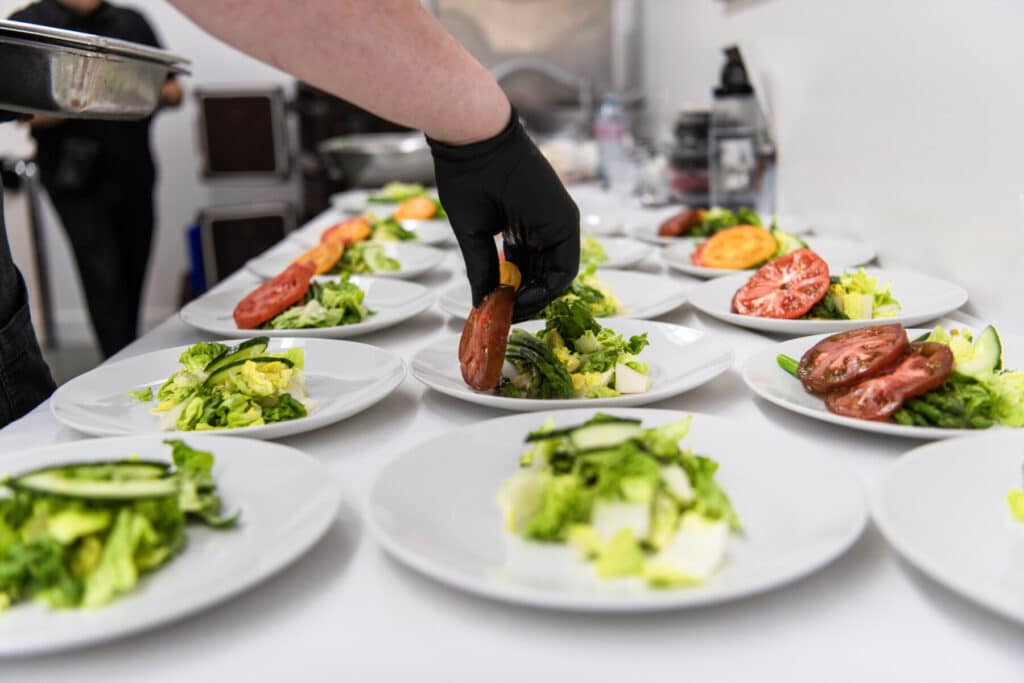
Our culinary team needed to create individual solutions while also considering the ingredients and preparation methods used throughout the larger event menu.
Our event director carefully documented each accommodation. Our service team then needed to understand which dish belonged to which guest and how it should be handled, identified and delivered.
- Modifying an existing menu item
- Developing a completely separate meal
- Substituting one or more ingredients
- Reviewing sauces, dressings, garnishes and finishing ingredients
- Using separate utensils or preparation areas when feasible
- Labeling and tracking individual dishes
- Coordinating guest names, table numbers or seat positions
- Briefing the culinary and service teams before the event
- Confirming what can safely be provided within the specific kitchen and venue
This coordination takes time, detail and clear communication.
Thanks to the creativity of our culinary team and the attentiveness of our event and service professionals, we pulled that particularly complex event off with flying colors.
Please Don’t Wait Until Dinner Is Served
People living with serious allergies are often skilled at advocating for themselves—especially when exposure could require emergency medication.
Still, they should not have to arrive at a celebration wondering whether there will be something safe and enjoyable for them to eat.
We would much rather know in advance and be ready to welcome that guest with a thoughtfully prepared dish.
There should never be an assumption that a caterer will automatically arrive with every possible alternative meal without prior planning. Even common requests such as gluten-free, dairy-free, vegan or nut-free require ingredient review and communication with the culinary team.
What to Ask on Your RSVP
Add a dietary question directly to your invitation or RSVP form.
You are welcome to use this wording:
Please list any diagnosed food allergies, dietary restrictions or other food-related needs. For allergies, please indicate the severity and whether cross-contact is a concern.
Once the responses arrive:
- Share them with your caterer by the requested deadline.
- Distinguish allergies and medical restrictions from preferences whenever possible.
- Provide each guest’s name and, when available, table or seat assignment.
- Ask follow-up questions when a response is unclear.
- Notify the catering team promptly when something changes.
- Avoid promising a guest that a specific accommodation can be made until it has been confirmed with the caterer.
An early conversation allows us to determine what is possible, offer appropriate options and create the most thoughtful plan available.
Help Us Help You Spoil Your Guests
Hospitality is about more than serving beautiful food.
It is about making people feel welcome.
When we know what your guests need, we can plan intentionally, communicate clearly and create an experience in which everyone feels that they belong at the table.
Help us help you spoil your guests. We would be honored to do it.
Want more thoughtful hosting ideas and behind-the-scenes inspiration? Follow Lisa Dupar Catering on Instagram for menus, events and a closer look at the team in action.